The directors are considering several options for increasing accessibility of the Mill’s first floor. This is the “shop floor” where tours usually begin. It is also the area where lectures, poetry readings and music take place for seated visitors. The goal is to increase ease of access for the mobility-impaired.
You can share your thoughts on this matter using the form below.
The anticipated changes would be to the southwest corner of the Mill, the so-called “visitor area.” This section includes the stairs added in 2014 and a table for pamphlets and the guestbook. This section was added to the original building by the Schwambs around 1869. The visitor area is fourteen inches lower than the shop floor; currently a single box step without railings allows for passage from one to the other.
Over two years, the directors have considered the matter in terms of usefulness to the public, space, practicality, and consistency with the appearance and atmosphere of the historic building. Any change to the interior of the building will require approval from the Massachusetts Historical Commission per the Mill’s preservation restrictions.
Below are three approaches to the question of increased accessibility to the first floor. The directors welcome any thoughts or suggestions from Friends of the Mill as they approach this matter.
Option A — Addition of a shallow stairway with railings. A temporary version of this has been built and in use for several months and appears in the slideshow below. The final stairway — or possibly two, side-by-side — would be made of wood and navigable for people with canes or walkers, as well as visitors with regular walking ability.
Option B — Addition of a wooden ramp with railings along the left wall. The ramp would be built to code, approximately fourteen feet long and three feet wide. It would allow passage to persons in wheelchairs, walkers and rollators, as well as visitors with regular walking ability. The shallow stair described in Option A above would be built beside it as a second way up and down.
Option C — Addition of an electric powered lift, self-operated or staff-operated, in the center of the visitor area and extending 40 inches out from the shop floor. It would allow passage to persons in wheelchairs, walkers, and rollators. The shallow stair described in Solution A above would be built beside it as a second way up and down.
See slideshow below for pictures of each solution.

Current Visitor Area Layout 
Option A – stairs with railings in visitor area 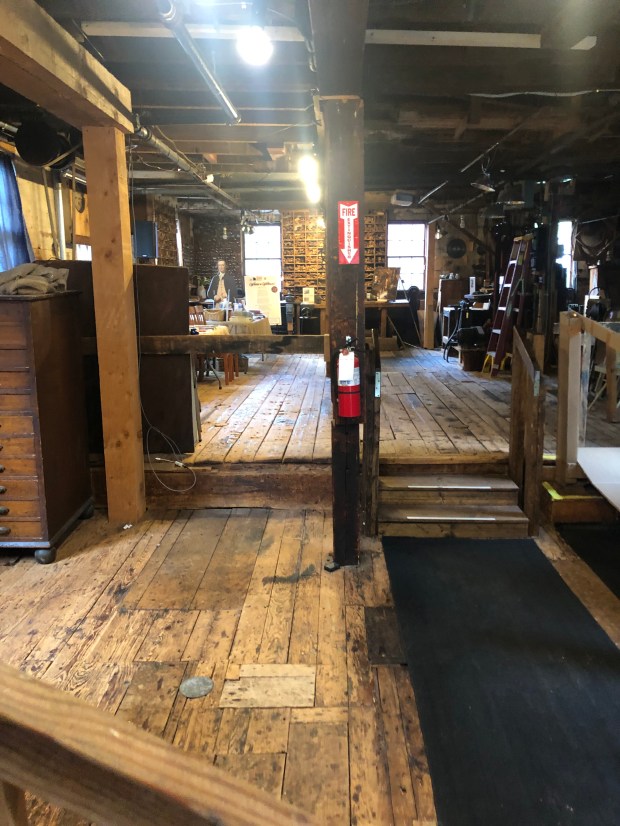
Option A – stairs with railings in visitor area 
Solution A – stairs with railings in visitor area 
Option B — ramp in visitor area 
Option B — model of ramp in visitor area 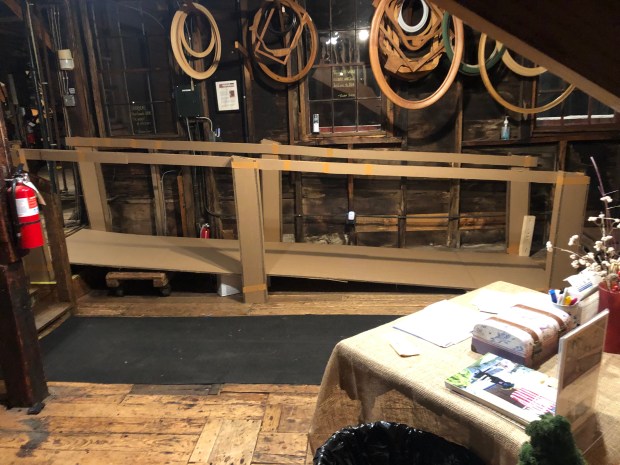
Option B — model of ramp in visitor area 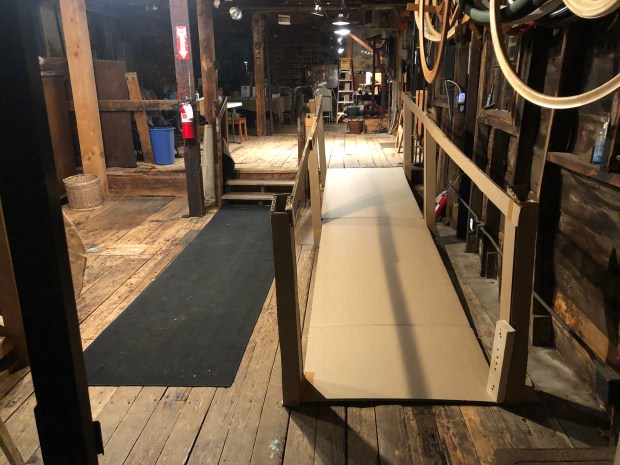
Solution B — model of ramp in visitor area 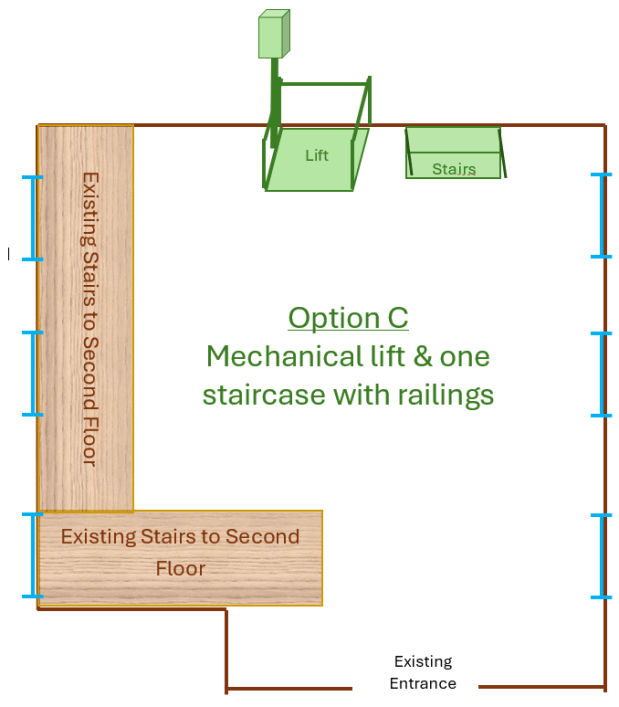
Option C – mechanical lift in visitor area 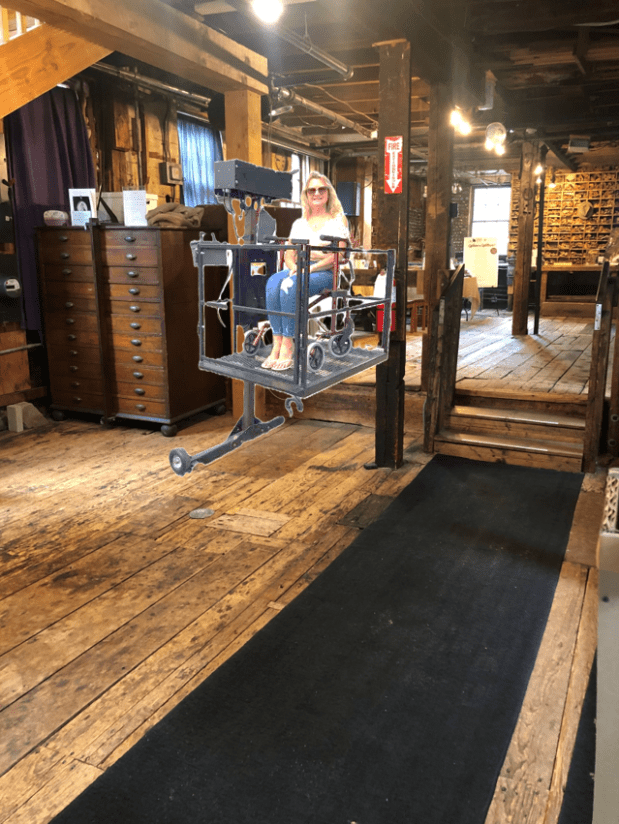
Option C – mock up of mechanical lift in visitor area 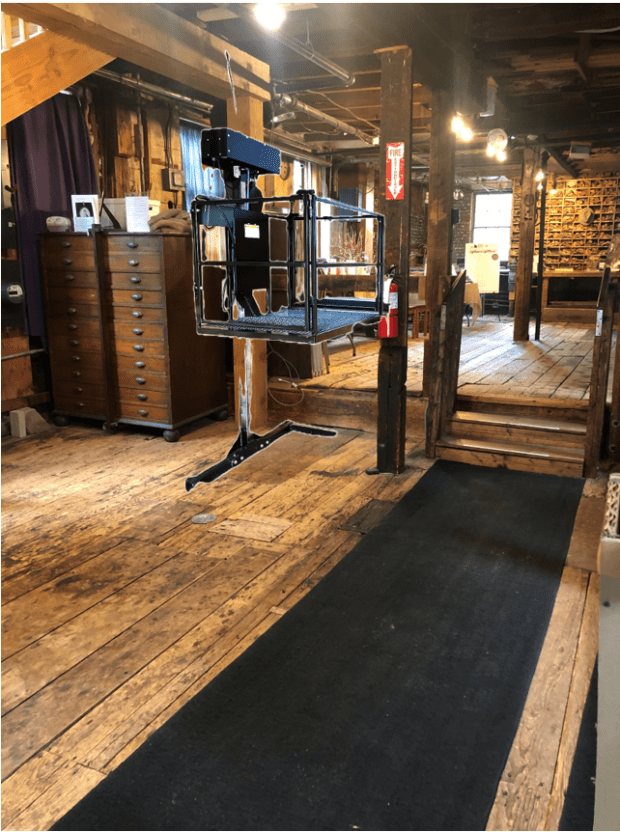
Option C – mock up of mechanical lift in visitor area 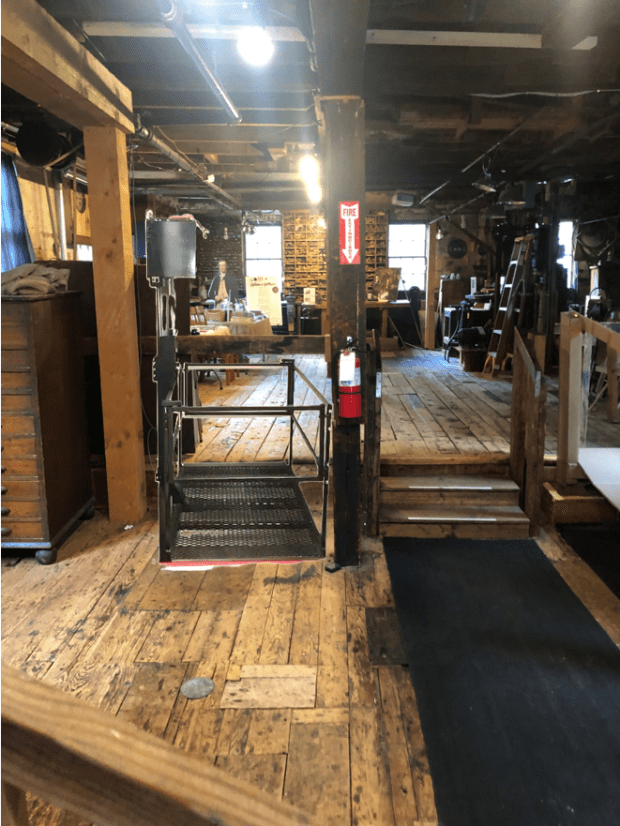
Option C – mock up of mechanical lift in visitor area


 Old Schwamb Mill